
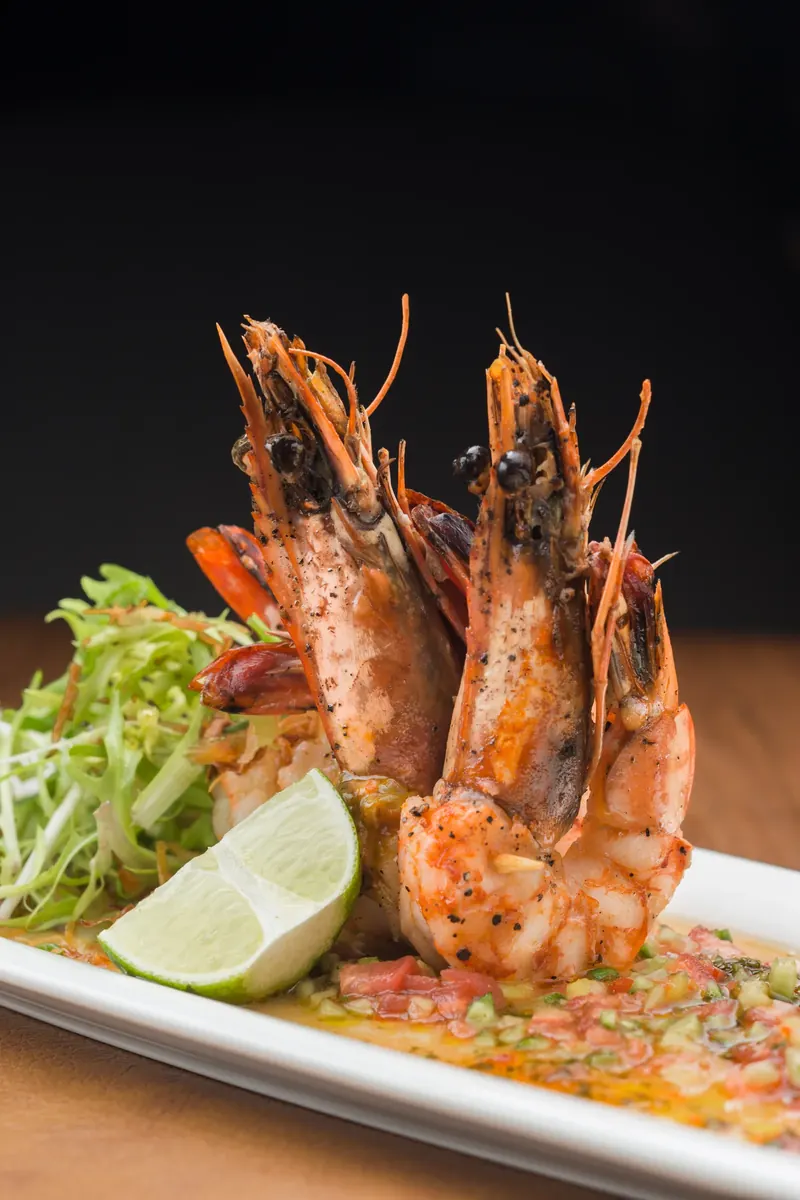
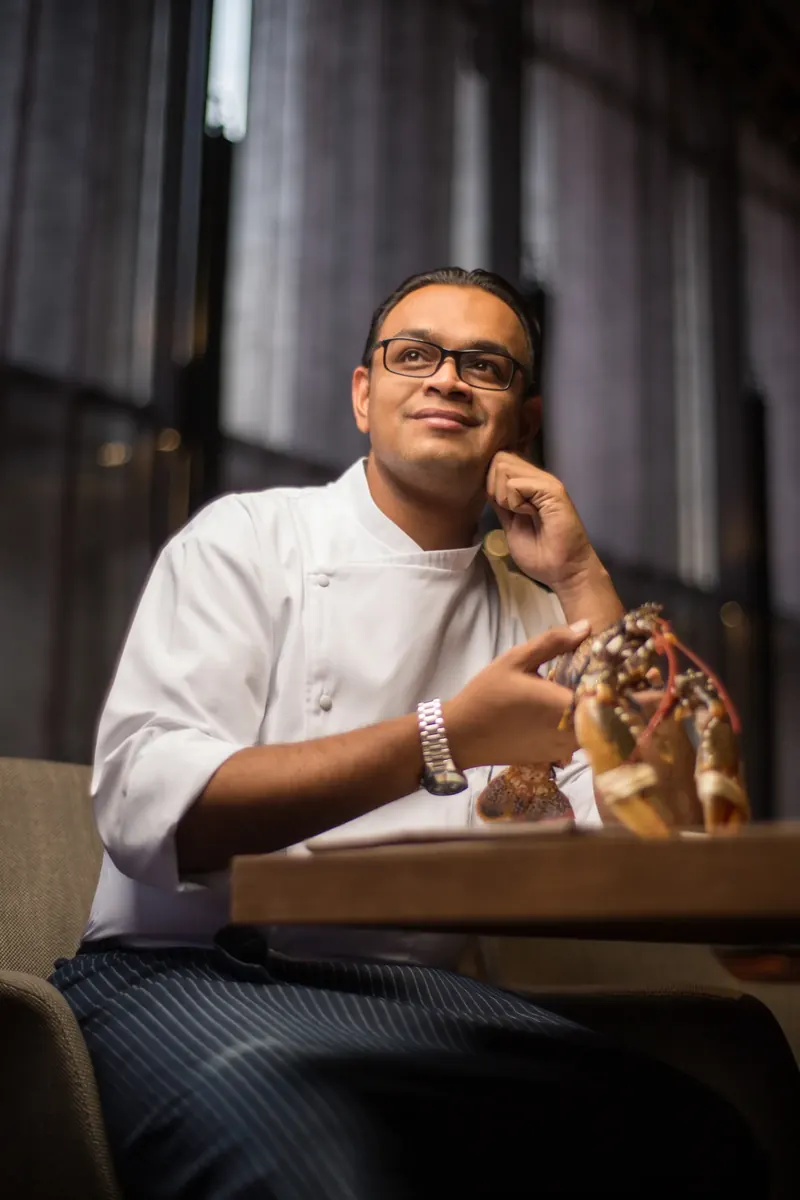
Rashidin Abd Rashid, born in Kuala Lumpur, cooked at the Hilton and the Shangri-La and as a private chef in the Maldives before building East restaurant in Kazakhstan.
Rashidin Abd Rashid was born in Kuala Lumpur, the eldest of five. He was still a boy when he learned to love the heat of the kitchen: his aunt owned a restaurant, and every morning he helped out there, watching, listening, and learning. At night, his father took him to the markets, where the air smelled of grilled meat and fresh spices, and he touched the fish, the vegetables, and the fruit, learning the weight of quality in his hands.
It was there, between the heat of the stoves and the pulse of the market, that he understood food was an art and far more than a means of survival. It was a way of life, a language of its own, a way to connect without words.
By 2001, he had mastered the science of food and left university with honors, but real learning happens with fire and steel. Then came the Hilton and the Shangri-La, big names with high expectations. He cooked for thousands, and each plate had to be perfect. It was hard work, and he loved it.
He learned the rhythm of a professional kitchen, its discipline and its chaos. He saw how a dish could change with the smallest touch and how technique mattered as much as instinct, and he learned that perfection was never a destination, only a pursuit. The chefs around him were relentless and the competition was fierce, and he thrived under that pressure, knowing that every mistake was a lesson and every success a stepping stone.
Then came the sea: the Maldives, a private island, cooking under a sky so wide it swallowed time. Kate Moss, Alexander McQueen, men with money, and women with power: he cooked for them all. He learned the way of the private chef, with its precision, its patience, and the ability to stand on a yacht and make magic with nothing but a knife and a flame.
He spent days at sea, feeling the salt in the air and adjusting to the rolling of the waves beneath his feet. He made do with what he had and turned limitations into creativity. The ocean was another kind of teacher, one that taught him adaptability was just as important as mastery. He learned to listen to ingredients, to the whispers of the waves, and to the expectations of those who demanded perfection.
Then Russia: the cold, the language, the challenge. He spent eight years with Novikov Group, mastering pan-Asian cuisine, building menus, and leading teams. Moscow tested him, and he passed.
He moved again, this time to Kazakhstan, and built something of his own. East was his kitchen and his vision, and his name came to mean something. He shaped menus that told stories, with dishes that carried memories of every place he had been.
And people noticed: recognition came, and awards followed. But more than that, guests returned. They remembered his food and the way it made them feel, and that, more than anything, was his measure of success.
But success is never final. He pushed forward, reinventing dishes and challenging expectations, and he studied flavors like a scholar, blending tradition with innovation. He took risks: some worked and some didn’t, but he always moved forward. His kitchen was his battlefield, his sanctuary, and his home.
He worked hard, as he always had. His hobby was sleep, because there was no time for more, but sometimes he played badminton, and sometimes he traveled. He went to Georgia, and the food, the people, and the warmth stayed with him; he knew he would go back. Every journey fed his craft, and every taste, every smell, every conversation found its way back to his kitchen.
He never stopped pushing forward. He built restaurants from nothing and made them matter, and he still does. He stands in his kitchen, fire at his back and knife in hand, and he creates.
For him, food is memory, connection, and life: a story told in every bite, a piece of himself served on every plate. For him, it is everything.
