
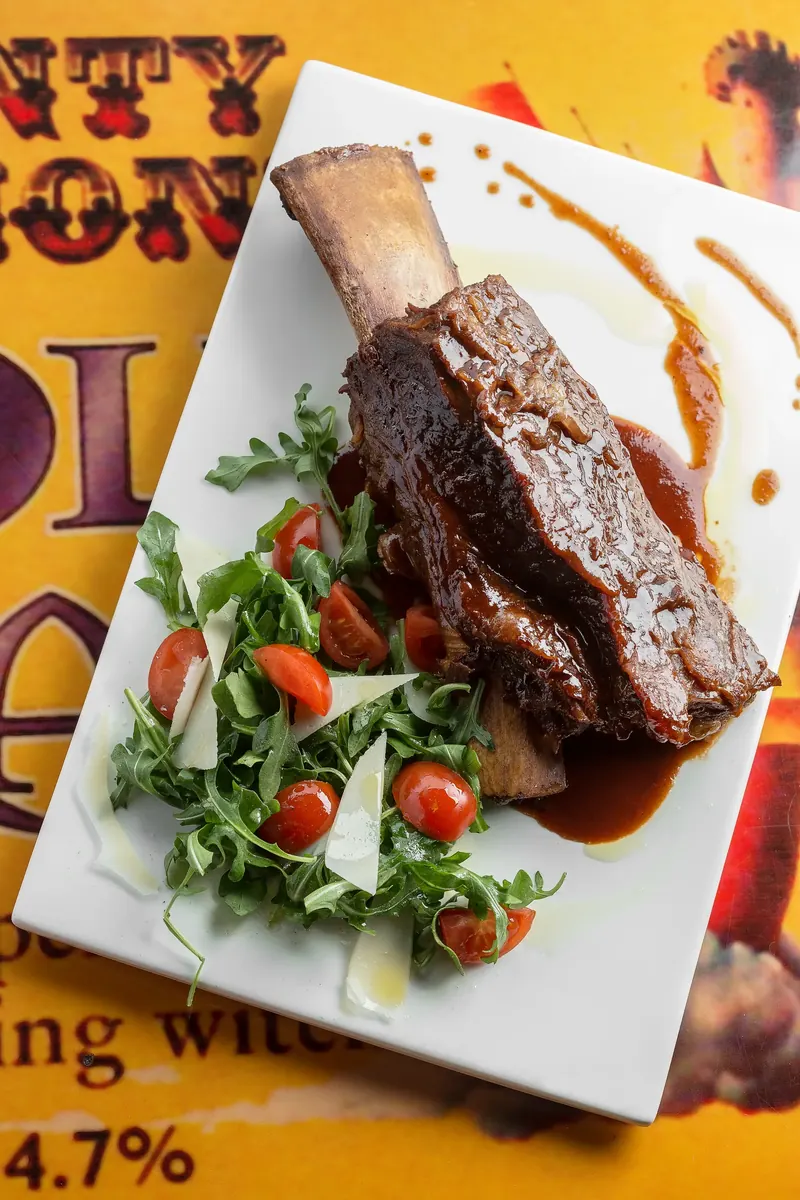
Tender beef short ribs, braised in red wine and beef broth with a medley of vegetables and herbs, finished with a rich, flavorful sauce.
Braised beef short ribs are a classic comfort dish, perfect for gatherings or a hearty family meal. This recipe takes the traditional German-style braised ribs and adds a subtle twist inspired by Hong Kong’s diverse culinary culture. Slow-cooked in a rich red wine and beef broth, the ribs become irresistibly tender, while a medley of vegetables and aromatic herbs creates a robust, flavorful sauce.
With this recipe, you’ll capture the essence of slow cooking: patience, depth of flavor, and the satisfaction of a dish that warms both body and soul. Whether served over creamy mashed potatoes or with crusty bread, these short ribs are bound to impress.
Ingredients
Method
- Take the ribs out of the fridge 30 minutes before cooking.
- Heat the oven to 150°C (300°F) with a rack in the lower third.
- Pat the ribs dry and season them generously all over with salt and pepper.
- Dust the ribs lightly with the flour and shake off the excess.
- In a large bowl, mix the wine, broth, tomatoes with their juice, sugar, garlic, thyme leaves and bay leaves.
- Heat the oil in the Dutch oven over medium-high heat until it shimmers.
- Sear the ribs in two batches for 2–3 minutes per side, until deep brown all over, and move them to a plate.
- Pour off all but about 2 tablespoons of fat from the pot.
- Add the onions, carrots and celery and cook over medium heat for 8–10 minutes, stirring, until the onions are golden.
- Return the ribs to the pot, bone side up, with any juices from the plate.
- Pour in the wine mixture; it should come about three quarters of the way up the ribs.
- Bring the pot to a boil on the stove.
- Cover with the lid and move the pot to the oven.
- Braise for 2½–3 hours, until a fork slides into the meat with no resistance and the meat pulls away from the bones.
- Lift the ribs onto a dish, cover with foil and keep warm.
- Strain the liquid through the sieve into a bowl, pressing lightly on the vegetables, and discard the solids.
- Let the liquid stand for 5 minutes, then spoon off the fat that rises to the top.
- Return the liquid to the pot and boil it over high heat for 15–20 minutes, until reduced by about half and thick enough to coat a spoon.
- Taste the sauce and season with salt and pepper.
- Serve the ribs with the sauce spooned over, with mashed potatoes or crusty bread.
- Prepare the Ribs
- Preheat your oven to 300°F (150°C).
- Season the short ribs generously with salt and pepper, then coat them lightly in flour.
- Make the Braising Liquid
- In a large bowl, combine the red wine, beef broth, diced tomatoes, sugar, garlic, bay leaves, and thyme leaves. Mix well.
- Sear the Ribs
- Heat the olive oil in a large Dutch oven or heavy pot over high heat.
- Sear the short ribs on all sides until golden brown, then remove and set aside.
- Sauté the Vegetables
- In the same pot, add the carrots, onions, and celery. Sauté for 8–10 minutes until the onions are golden.
- Braise the Ribs
- Return the short ribs to the pot and pour in the wine and broth mixture. Bring to a boil.
- Cover the pot with a lid and transfer it to the preheated oven. Braise for 2 hours, or until the meat is tender and falls off the bone.
- Make the Sauce
- Remove the ribs from the pot and keep them warm.
- Strain the braising liquid through a sieve, discarding the solids. Return the liquid to the pot.
- Simmer over high heat until the liquid reduces to a sauce-like consistency.
- Serve
- Place the ribs on a serving plate, spoon the rich sauce over them, and serve hot. Pair with mashed potatoes or crusty bread for a complete meal.
- Vegetables and liquid cut to fit a 5–6 litre Dutch oven (3 onions, 2 carrots, 2 celery stalks, 800 g canned tomatoes) Scaled straight down, the original would still need 8 onions and 1.5 kg of tomatoes for four portions. The vegetables are strained out at the end, and with less of them the ribs stay three-quarters covered in one pot.
- Flour cut from 250 g to 3 tablespoons The ribs only need a light dusting; a heavy coating falls off and burns in the pot.
- Fresh diced tomatoes replaced with canned Canned tomatoes are consistent all year and save 15 minutes of dicing.
- Sugar reduced to 3 tablespoons Keeps the chef's sweet-savoury balance for the smaller amount of liquid.
- Braising time given as 2½–3 hours and judged by tenderness Supermarket bone-in short ribs are often thick, and 2 hours can leave them chewy.
- Fat skimmed from the liquid before reducing Short ribs release a lot of fat; removing it first gives a glossy sauce rather than a greasy one.
The dish in the photograph was cooked by the restaurant for this story. Photo: Oleksandr Slyadnyev.