
Chiang Mai Pork Ribs with Hang Lay Curry and Pumpkin Purée
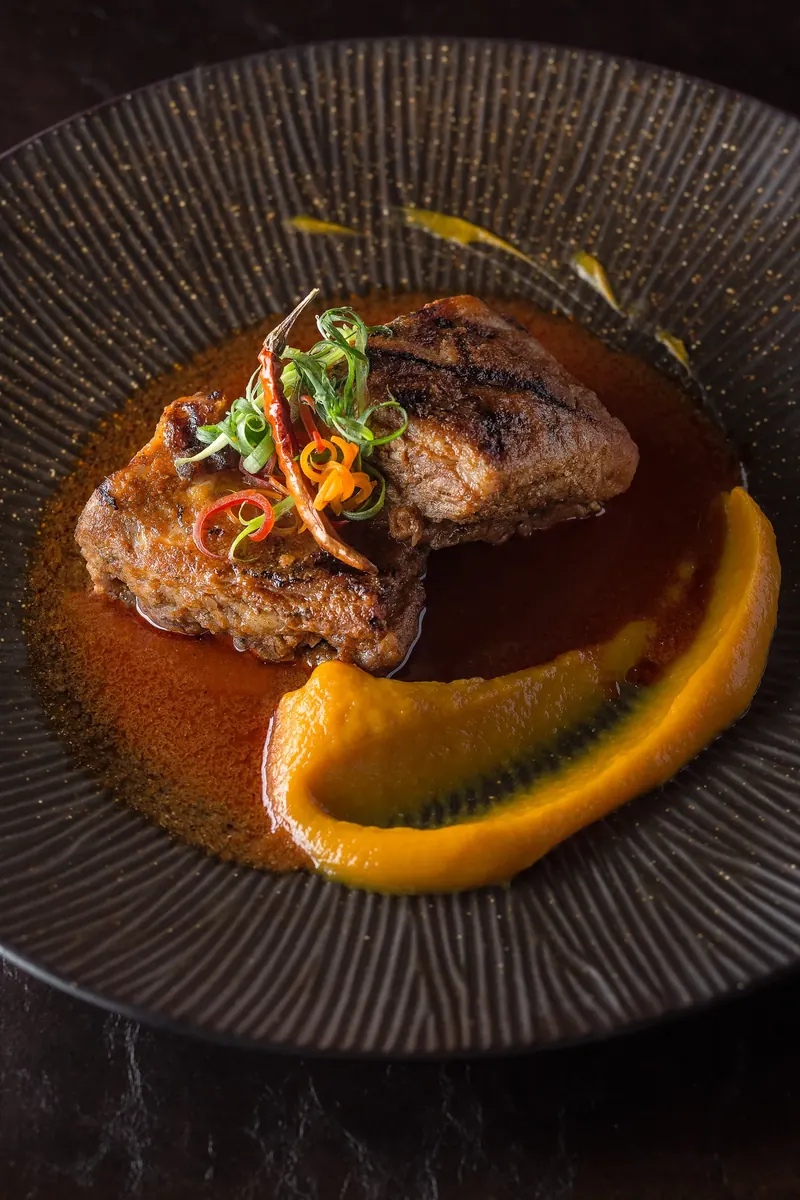
Tender pork ribs slow-cooked with Hang Lay curry paste, palm sugar, and tamarind, served with a silky pumpkin purée flavored with ginger and orange zest.
Chiang Mai Ribs bring the bold and aromatic flavors of Thai cuisine straight to your plate. These tender pork ribs are marinated in Hang Lay curry paste and slow-cooked to perfection, ensuring the meat falls off the bone. Complemented by a creamy pumpkin purée infused with ginger and orange zest, this dish is a perfect balance of savory and sweet.
Whether you’re hosting a dinner party or simply treating yourself, these ribs are sure to impress. The flavorful marinade, enriched with palm sugar, tamarind, and pickled garlic, creates a delightful harmony of spice and sweetness, transporting you to the bustling streets of Chiang Mai.
Ingredients
Method
- Heat the oven to 150°C (300°F).
- Heat the oil in the wok over medium heat, add the curry paste and fry for 2–3 minutes, stirring, until fragrant.
- Pour in the broth and bring it to the boil.
- Stir in the pickled garlic and its liquid, the ginger, palm sugar and tamarind, and simmer until the sugar dissolves.
- Taste and add salt; the sauce should be salty, sweet and sour at once.
- Arrange the ribs meaty side down in the dish in a single snug layer.
- Pour the hot sauce over the ribs.
- Cover tightly with the lid or a double layer of foil.
- Braise for 2½–3 hours, turning the ribs after 1½ hours, until the meat pulls easily away from the bone.
- About 40 minutes before the ribs are ready, put the pumpkin, ginger and orange zest in the steamer basket.
- Steam over boiling water for 20–25 minutes, until the pumpkin is very soft.
- Blend the pumpkin with the ginger and zest until smooth, adding 2–3 tbsp of the steaming water if it is too thick.
- Season the purée with salt and keep it warm.
- Lift the ribs onto a plate and cover them with foil.
- Pour the cooking liquid into the wide saucepan and spoon off the fat.
- Boil the liquid for 8–12 minutes, until reduced by about half and syrupy.
- Return the ribs to the pan and turn them in the glaze until coated.
- Serve the ribs with their sauce, a generous spoonful of pumpkin purée and a Thai chilli on each plate.
- Prepare the Ribs
- Heat a wok over medium heat and add the Hang Lay curry paste. Cook until fragrant.
- Add the chicken broth and bring to a boil.
- Stir in the pickled garlic, pickled garlic juice, ginger, palm sugar, and tamarind juice. Season with salt.
- Place the pork ribs into a roasting bag and pour the curry mixture over them. Seal the bag.
- Slow Cook the Ribs
- Cook the ribs in the roasting bag at 160°F (70°C) for 12 hours.
- Prepare the Pumpkin Purée
- Steam the pumpkin, ginger, and orange zest together at 212°F (100°C) for 1 hour.
- Blend the steamed ingredients until smooth. Add salt to taste.
- Serve
- Plate the ribs with the sauce from the roasting bag. Add a generous serving of pumpkin purée on the side.
- Garnish with fresh Thai chilies for a vibrant finish.
- 12 hours at 70°C (160°F) in a roasting bag replaced with a covered braise at 150°C (300°F) for 2½–3 hours Most home ovens can't hold 70°C accurately. A covered braise at 150°C softens the rib meat until it pulls from the bone in a fraction of the time.
- Sauce reduced to a glaze after braising In a sealed bag nothing evaporates and the ribs come out glossy; in a dish the liquid stays thin until it is boiled down.
- Hang Lay curry paste can be replaced with Massaman curry paste Hang Lay paste, from northern Thailand, is sold in Thai shops and online. Massaman paste, in most supermarkets, has the same warm dried spices and tamarind sweetness.
- Pickled garlic can be replaced with 4 fresh garlic cloves, 3 tbsp rice vinegar and 1 tsp sugar Thai pickled garlic comes in jars in Asian shops; vinegar and a little sugar give the same sweet-sour note.
- Pumpkin steamed for 20–25 minutes instead of 1 hour Cubes of pumpkin are tender in about 20 minutes; an hour of steaming makes them watery and dulls the orange.
- 1 tbsp oil added to fry the curry paste Most curry pastes need a little oil to fry without sticking and to release their aroma.
The dish in the photograph was cooked by the restaurant for this story. Photo: Oleksandr Slyadnyev.