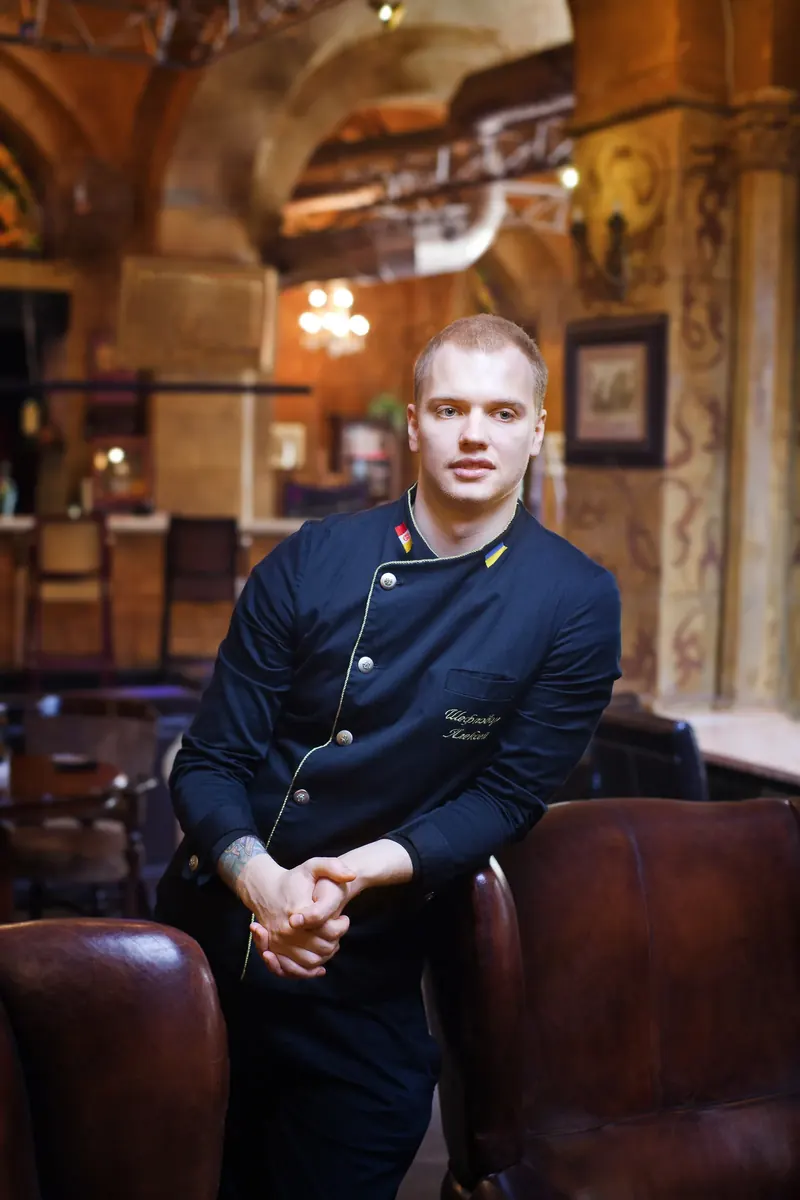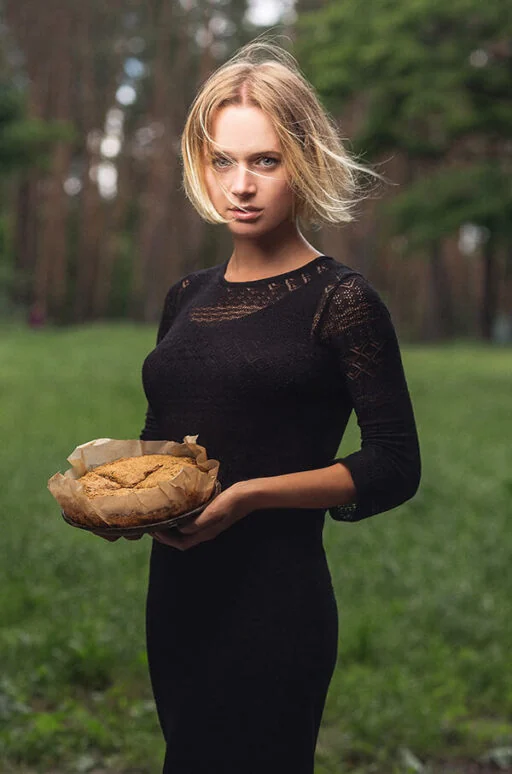
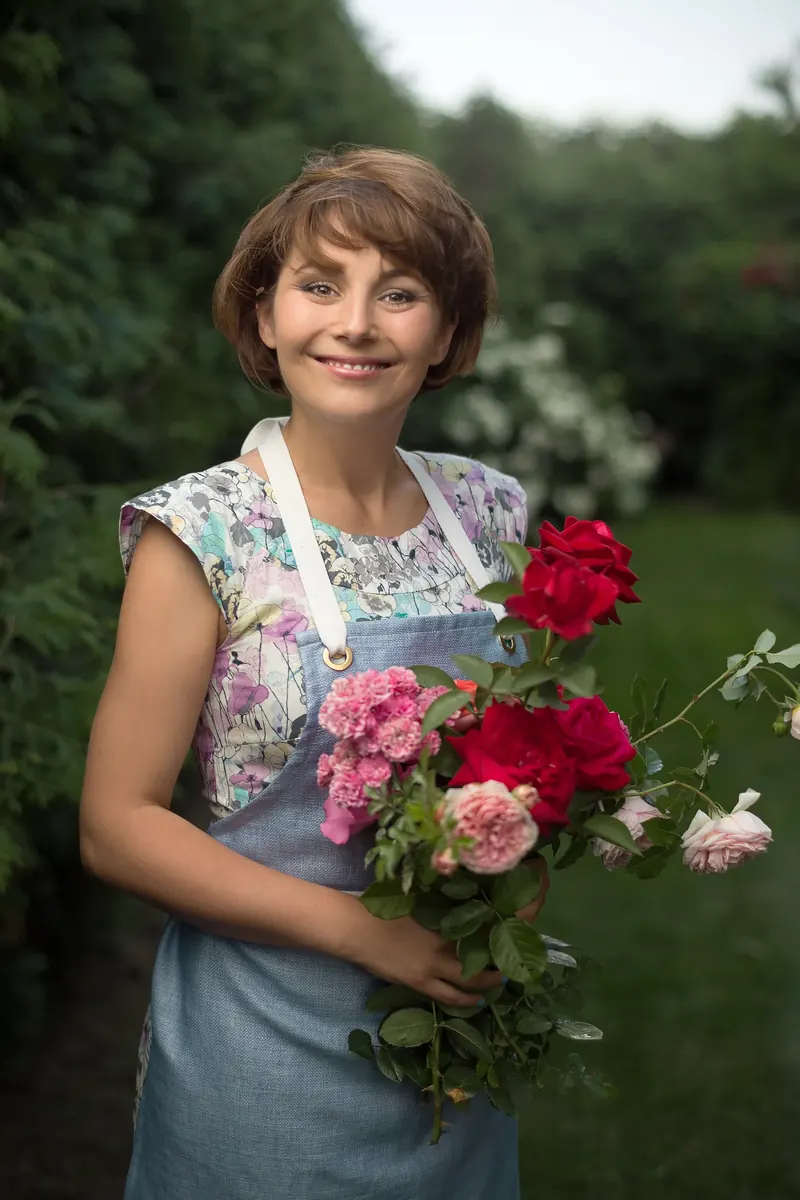
Dasha Malakhova grew up in a communal apartment in Kyiv’s Podil and washed dishes in London while at drama school. Today she hosts TV cooking shows and is chef at the Kartata Potata culinary studio.
I’ve been cooking since I was about 8. I remember I was already in second grade, and my parents had started going on tour with the theater very often, so I stayed home with my mom’s friends, babysitters and relatives. But my main friends were the neighbors in our communal apartment in Podil, a very old part of Kyiv.
I loved meeting them in the shared kitchen. That’s where I realized that housework and food could cheer me up. I’m 35 now, and I enjoy washing my floor, doing laundry by hand and spreading condensed milk and raspberry jam on waffle cake layers.
When I was at drama school in the UK, I couldn’t afford lunch in the canteen, so I cooked pasta with herbs, Thai rice and soup. At lunchtime I took out my lunch box and ate what I had cooked. Funnily enough, everyone thought I was posh, cool and a very picky eater. My path to the professional kitchen led through the kitchen sink.
An Italian restaurant in London refused to hire me in their kitchen, but I got work as a dishwasher. After my classes at drama school, I worked the night shift at the restaurant, and I never got tired of it.
Now that I have my own cooking shows on TV, I come home after shooting 15 shows a day and cook dinner with huge pleasure. I don’t understand how anyone can get tired of the kitchen. My mother, grandmothers and aunts are the same.
My mother taught me to feel what I cook. She was the best cook in the world. She cooked crabs in a bathtub and pickled cucumbers and tomatoes in a fish tank, and nothing could stop her, not even a lack of dishes, pots or ingredients. She and my dad used to borrow money for dinners and managed to cook real feasts for us.
To this day, I love to cook and eat green borscht from my mom’s recipe. I have to calculate the proportions for my recipes, though I hate doing it; usually I measure everything in pinches, handfuls and by eye. But just like my mom, I want to pass on my knowledge and experience in the kitchen to others down to the smallest detail, so I have to calculate. Even during the 6 years my mother was paralyzed, she taught her nurse all her recipes and secrets.
Now only two people cook exactly like my mother: her nurse Mila and me. My husband loves it when I cook Mexican food, my eldest son loves my donuts, my baby boy loves cherry muffins, my dad loves my soups, and I love tea with lemon and sugar.
In Ukraine, tea with lemon is the one food considered a cure for everything. I think preparing food and drinks is a way to show care and love. After all, when a friend feels bad, all you have to do is offer a cup of tea, and life gets better at once.
For me, cooking is a mixture of chemistry, physics and love. I thank my lucky stars that I was able to turn my passion into work that brings me fun, money and recognition. I am very happy.
Why are men considered better cooks?! Because if you give a chef a whole salmon, he will make an incredible stuffed fish. But give the same fish to a woman, and she will make soup for a couple of days from the head and tail, cutlets for the whole family from the belly, and the fillet will be left for steaks. Because a woman is a household manager as well as a cook.
But when people say, “Your husband must be so happy, because you’re such a great cook!”, I always answer, “My husband is happy and smiling because I joke a lot!” I never thought that knowing how to cook was what’s valuable. I think what’s valuable is being able to do something good for people.
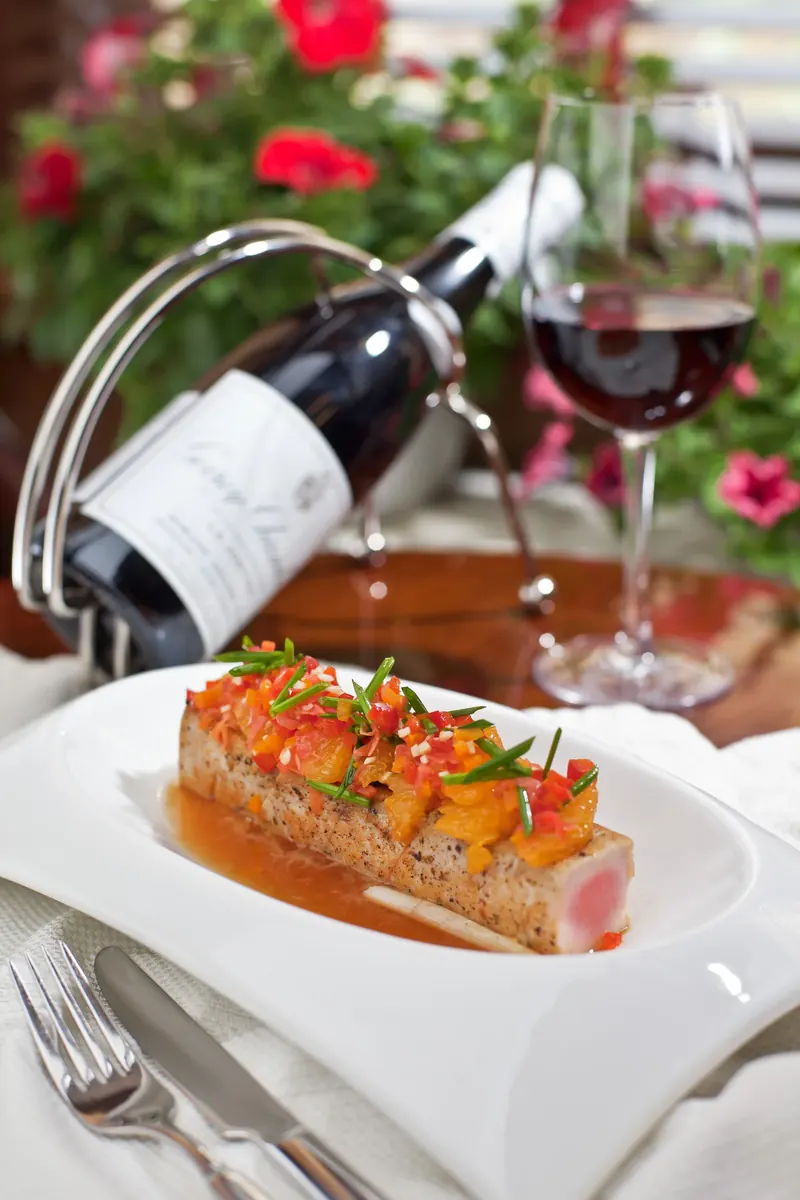
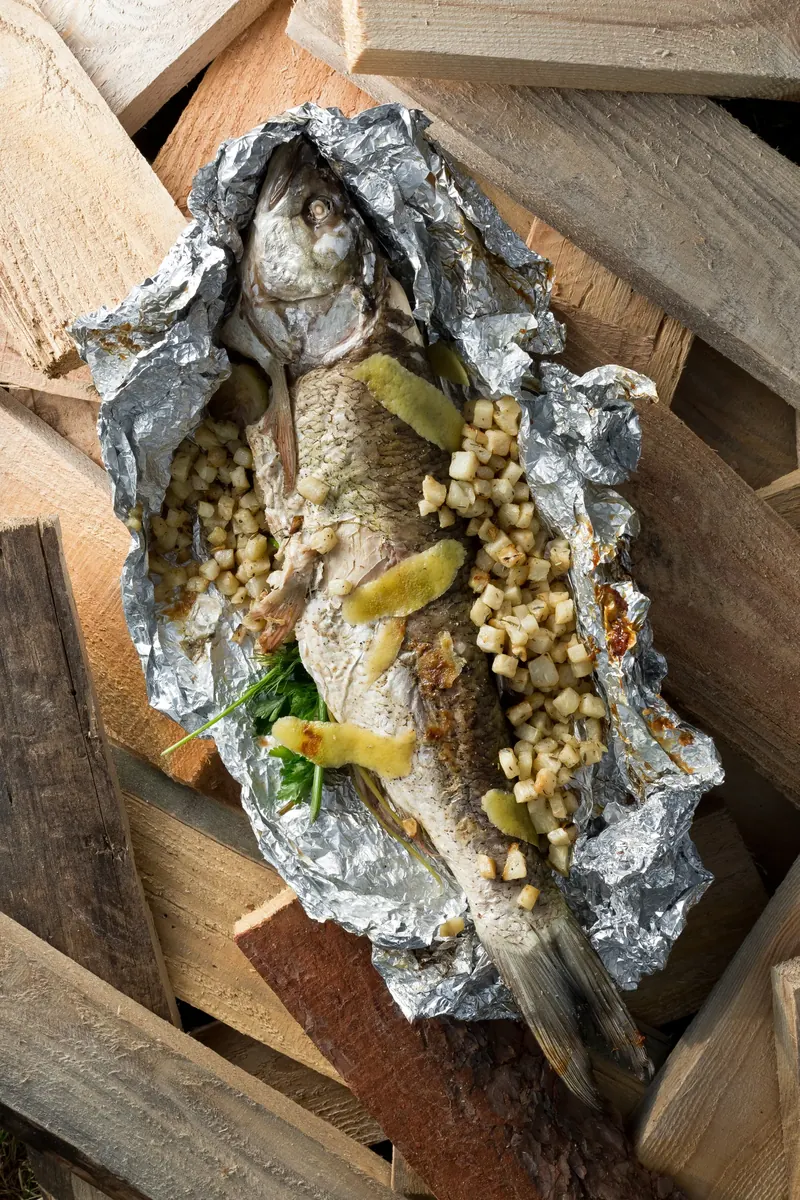
Asp with herbs, lemon and white pepper, with a side of fried celery and thyme. By the way, I didn’t buy this fish: it was a gift from a friend. This is a very simple dish.