How Chefs Got Their First Kitchen Jobs, and What Those Jobs Taught Them
We re-read all 105 Food’n’Chef stories to see how these chefs got their first kitchen jobs, and in 30 of them the chef started at the sink, as a helper or assistant, or in the dining room rather than at the stove.
Food’n’Chef has gathered 105 stories of chefs and cooks, 103 of them told in the first person. For this piece we re-read every one of them and marked each passage about how the chef got into a working kitchen: the first job, the age it started, the first workplace and the first chef they worked under. Then we counted.
In 76 stories the chef says when, where or as what they started working. For many, the first job was not cooking at all. In 30 stories it was washing dishes, cleaning or prep work, a job with helper or assistant in the title, or work in the dining room and behind the bar. In 28 stories the chef gives the age they started, and 17 of those were 15 or younger. Five began in a bakery or a pastry kitchen, and three made pizza. Below are the patterns that came up in at least three stories each, in the chefs’ own words.
How old they were
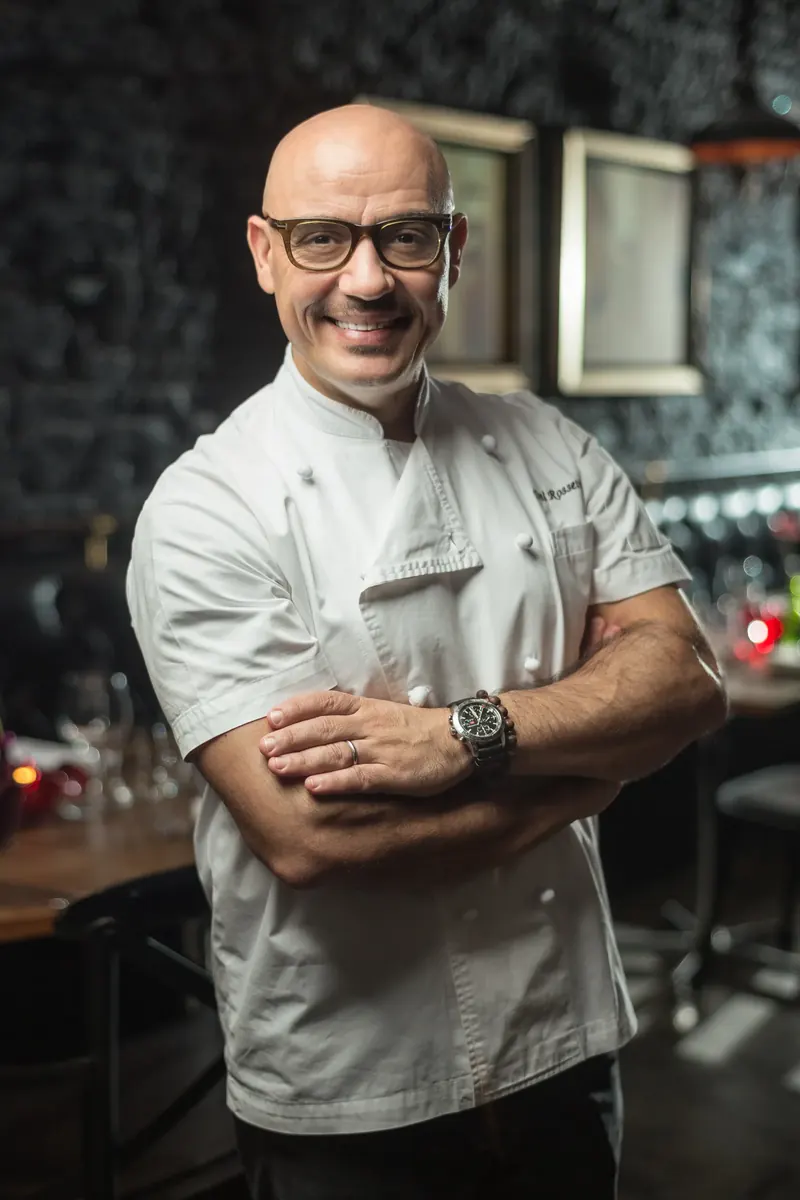
Of the 28 stories that give a starting age, 17 put it at 15 or younger, and 15 itself is the most common age, given in six. In three, the chef was 18 or 19. The two youngest began in restaurants where a parent worked. Tony Rosetti’s parents ran a restaurant in a small town at the tip of Italy’s heel.
My first memory of working in the restaurant is from when I was 5: I helped carry cups and plates to the kitchen.
Tony Rosetti, Singapore
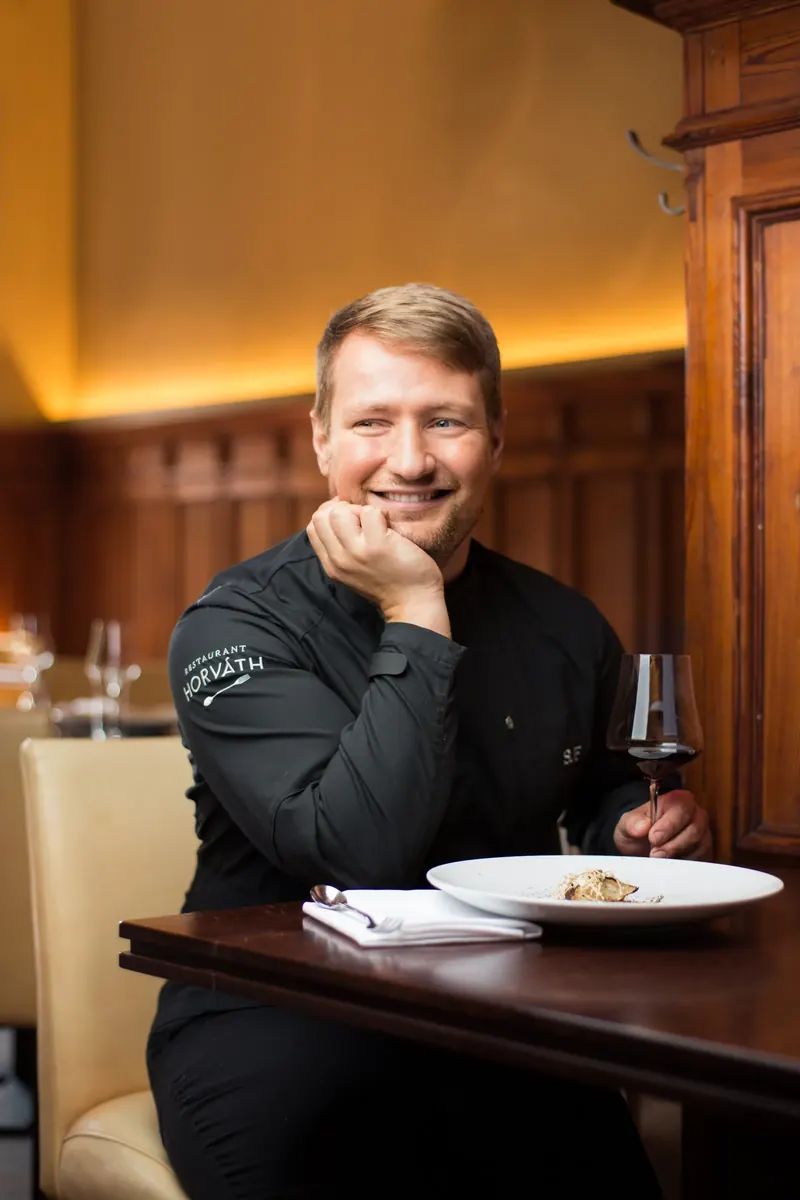
When he was six, his father put him in charge of the coffee machine and gave him a wooden stool he had made himself, so he could climb up and make espresso. Stefano Antoniolli was also six when he started helping his father, who worked at a restaurant, on weekends with weddings and christening parties. Sebastian Frank quit school at 13.
I was so serious about my decision that I immediately went to the nearest hotel and asked to work in the kitchen. It was during the Easter holidays, and after that I never went back to school.
Sebastian Frank, Berlin, Germany
Nine stories run the other way: the chef came to professional cooking as an adult, after work in finance, at a bank, on a farm or in another field. Tomáš Kysela’s café in Prague opened in 2000, and soon after that he took over its stove himself.
I worked out recipes day after day with no previous experience and no official courses, and I never took a single cooking lesson.
Tomáš Kysela, Prague, Czech Republic
Vitaliy Voronchikhin studied at an economics academy and worked various jobs before he started as a pastry assistant in 2003, “completely fascinated by everything”.
At the sink, or as the helper
Thirteen stories begin at the bottom of the kitchen. In nine the chef washed dishes; in the other four the early work was cleaning, peeling vegetables or prep. Dasha Malakhova, who now has her own cooking shows on TV, puts it in one sentence.
My path to the professional kitchen led through the kitchen sink.
Dasha Malakhova, Kyiv, Ukraine
An Italian restaurant in London would not hire her for its kitchen but took her on as a dishwasher, and she worked the night shift after her classes at drama school. James Roy Oakley started washing up at 14.
I washed plates, cups and forks. So you could say I started from the bottom and had to claw my way up through hard work and persistence.
James Roy Oakley, Hong Kong
Misha Schaefer was studying theology when he took a dishwashing job, and he describes the climb one task at a time.
I washed and washed, then they trusted me to clean vegetables, then gradually to make simple preparations, and I got hooked.
Misha Schaefer, Berlin, Germany
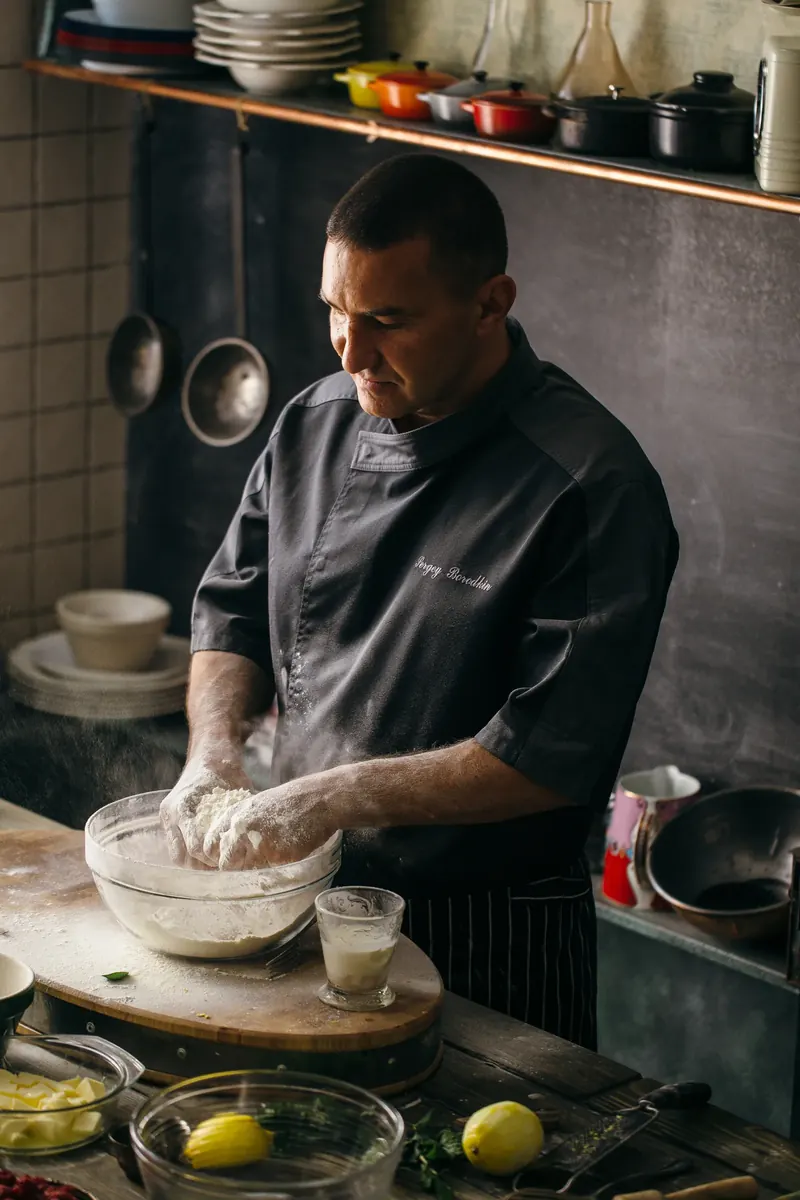
Sergey Baysarevich’s father, who worked at a restaurant in the capital, offered him one of the simplest jobs there: peeling and cutting vegetables. In four years at that restaurant he went from the vegetables to sous-chef.
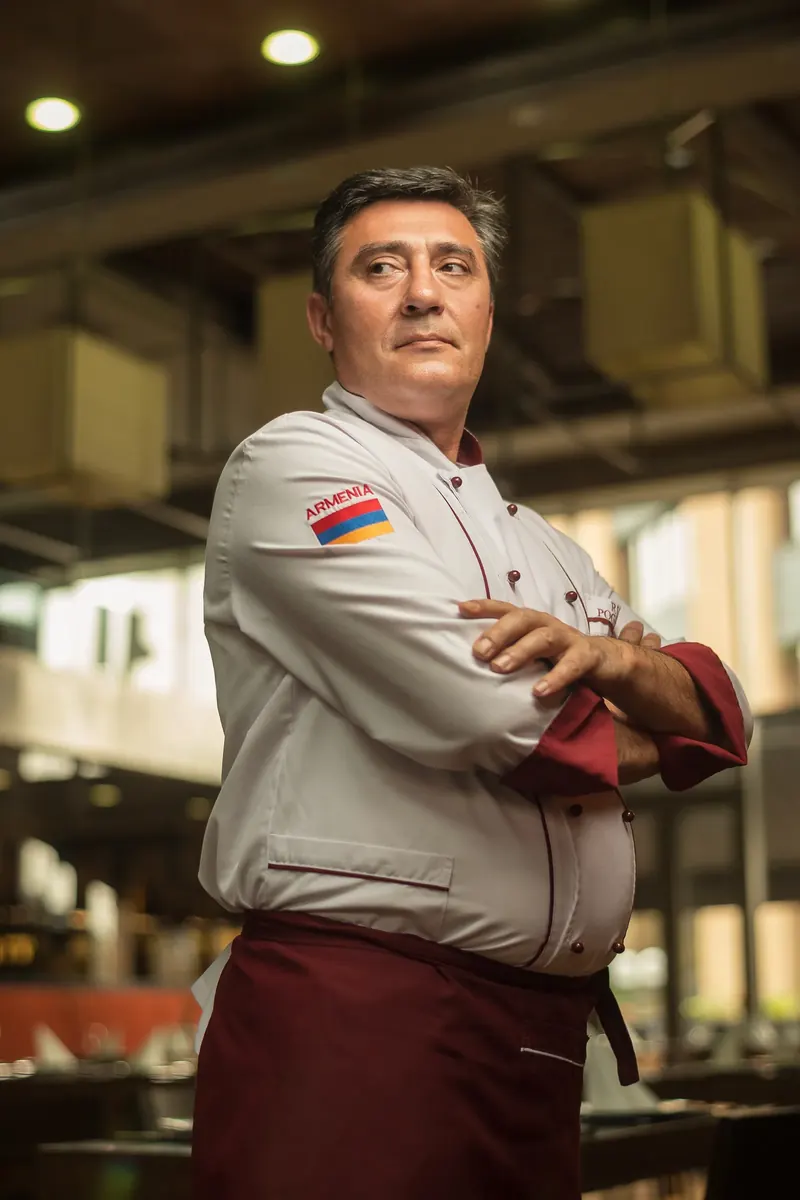
Twelve stories, Caesar Lee’s among them, give a first job with helper or assistant in the title: kitchen helper, cook’s helper, chef’s assistant, assistant cook, pastry assistant. Ruben Pogosyan went to the Yerevan Food Industry College first.
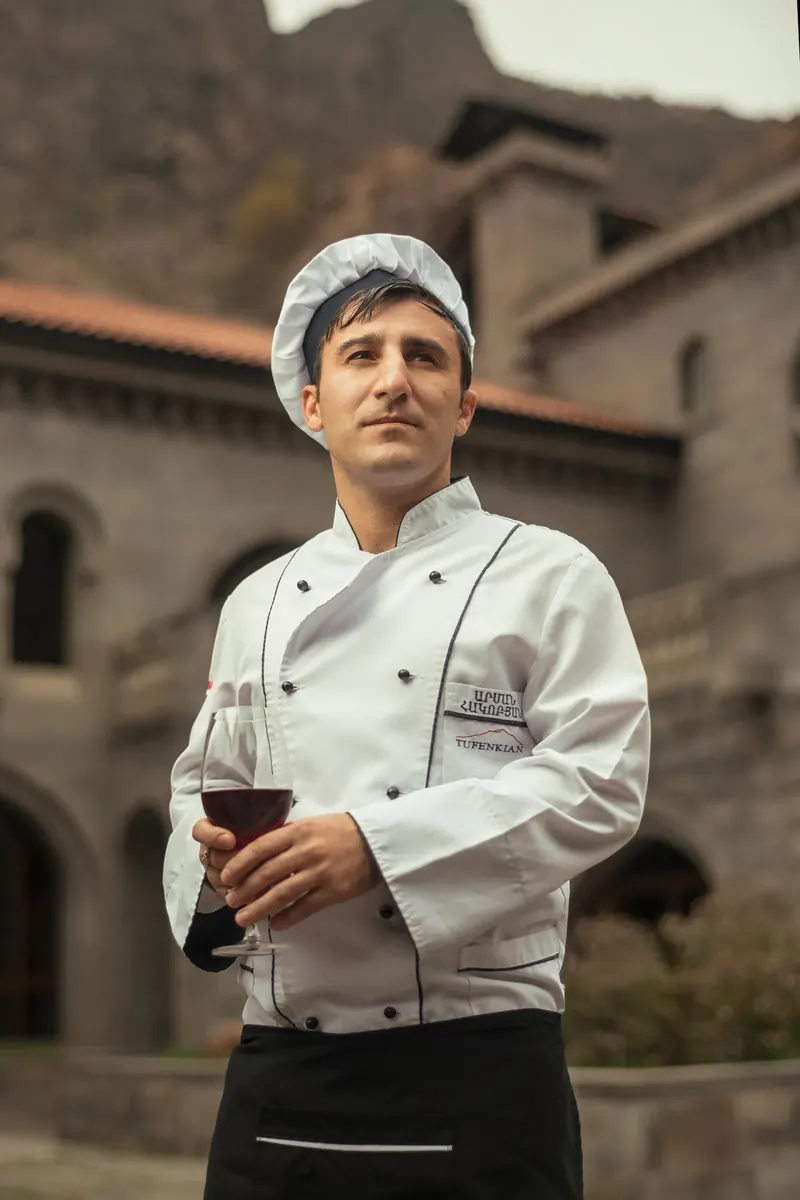
Only birds can soar into the sky right away. I’m obviously not a bird, so I started my path as a cook’s helper in a restaurant with the self-explanatory name “Armenia.”
Ruben Pogosyan, Yerevan, Armenia
The dining room first
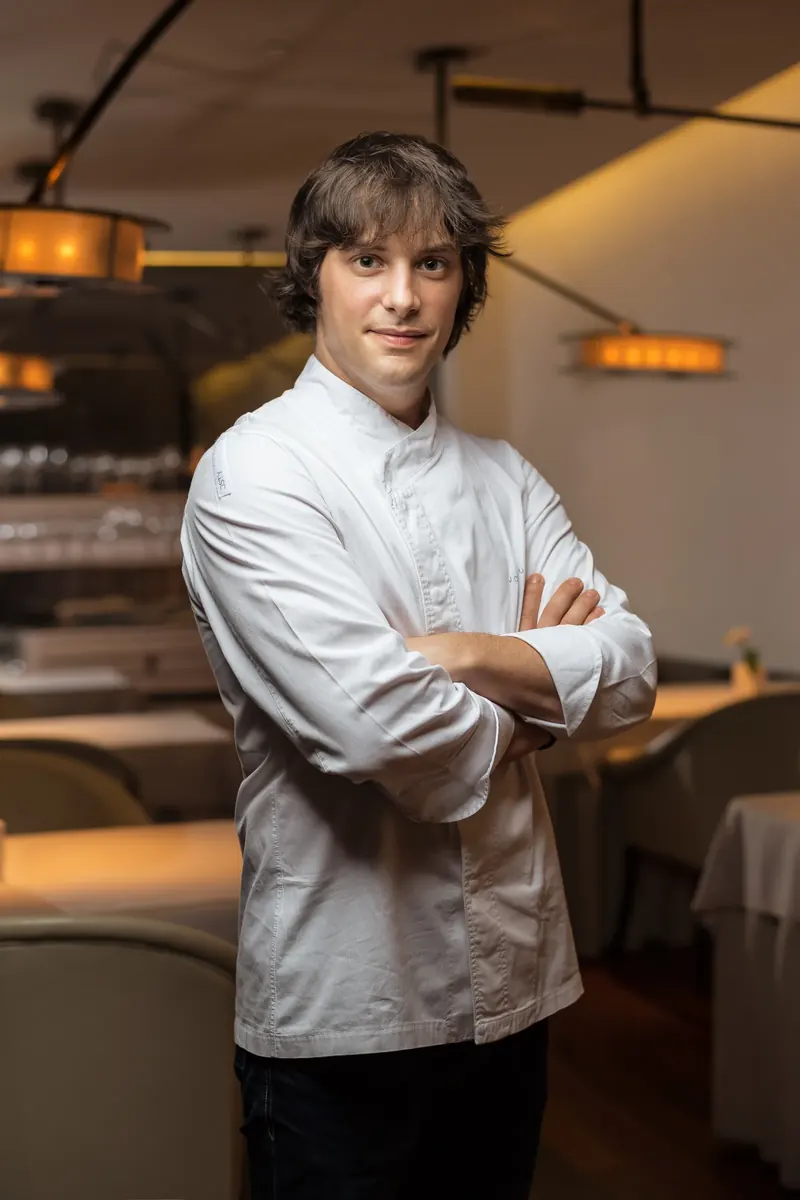
Eight stories begin outside the kitchen: waiting or clearing tables, carrying plates, or working behind the bar. Jordi Cruz Mas entered a hospitality school in Manresa at a little over 11.
Every professional should know the craft: at 14 I started working as a waiter at Estany Clar in Cercs, in the province of Barcelona.
Jordi Cruz Mas, Barcelona, Spain
Ten years later, at the same place, he received his first Michelin star, at 24. Billy Otis started as a busser in a summer job at 13.
It was fast-paced on the floor and you were part of a performance; I was hooked.
Billy Otis, Hong Kong
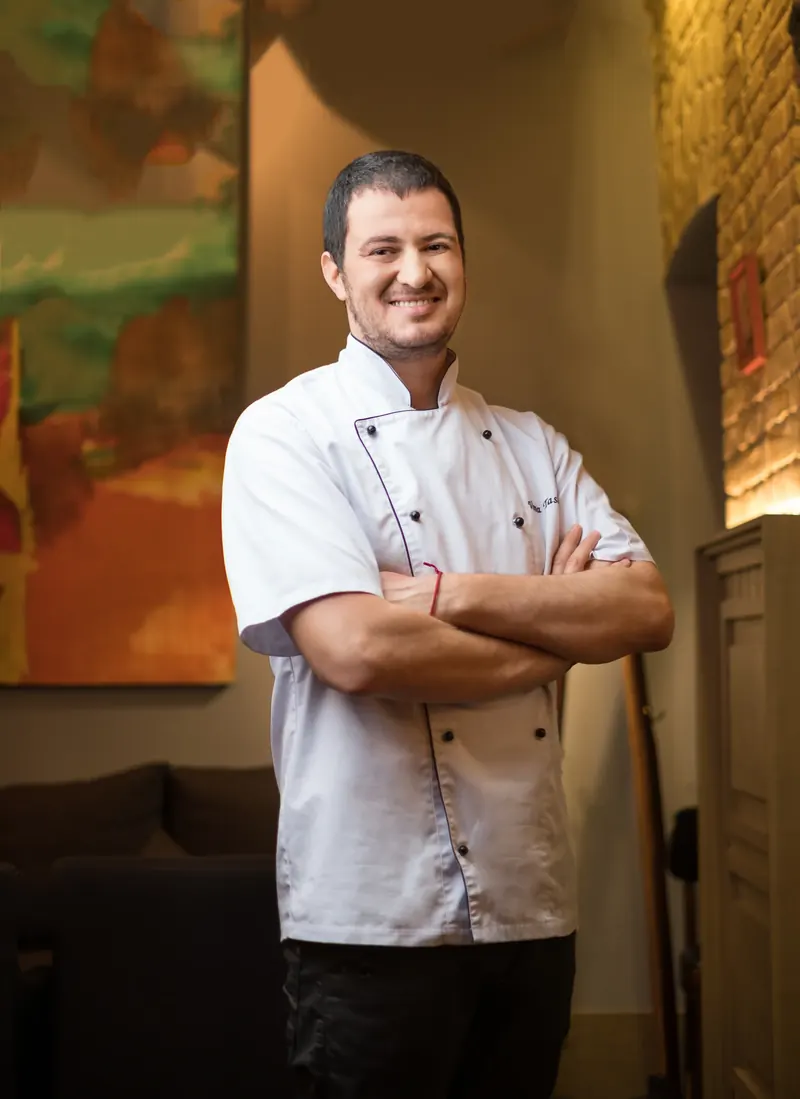
Vova Tashaev’s culinary career began while he was still at school.
For several years I worked as a waiter and bartender, sneaking peeks into the kitchen between rushes of customers and watching the chefs work.
Vova Tashaev, Kyiv, Ukraine
Alejandro Sanchez calls his job as a waiter in Madrid his “first real step” toward becoming a chef. Matt Abergel worked as a dishwasher, a busboy, a waiter and a barman before he became a chef, and Oleg Pashkevich was a bartender when he decided to make sushi. Tony Rosetti went from carrying plates to waiting tables, then into the kitchen as his mother’s assistant, and says he saw restaurants “both from the back and from the front”.
Pocket money, a skateboard, a meal
Eight stories give a plain, practical reason for taking a first or early kitchen job: money, food, or a family that needed help. Danny Chaney’s first restaurant job came when he was a kid.
I was into skateboarding and needed money for a new board, so I got a job as a dishwasher. That’s how it all started.
Danny Chaney, Hong Kong
Misha Schaefer went to wash dishes “to earn some pocket money”, and Matthieu Bonnier’s first job, “just to make some pocket money”, was making pizza with one of his parents’ neighbors. Caesar Lee took a hotel kitchen job at 13 or 14 because it meant he would at least be fed. Murat Abay, one of seven children, worked at shops and restaurants as a kid to help support the family. Arman Akopyan’s reason was the same.
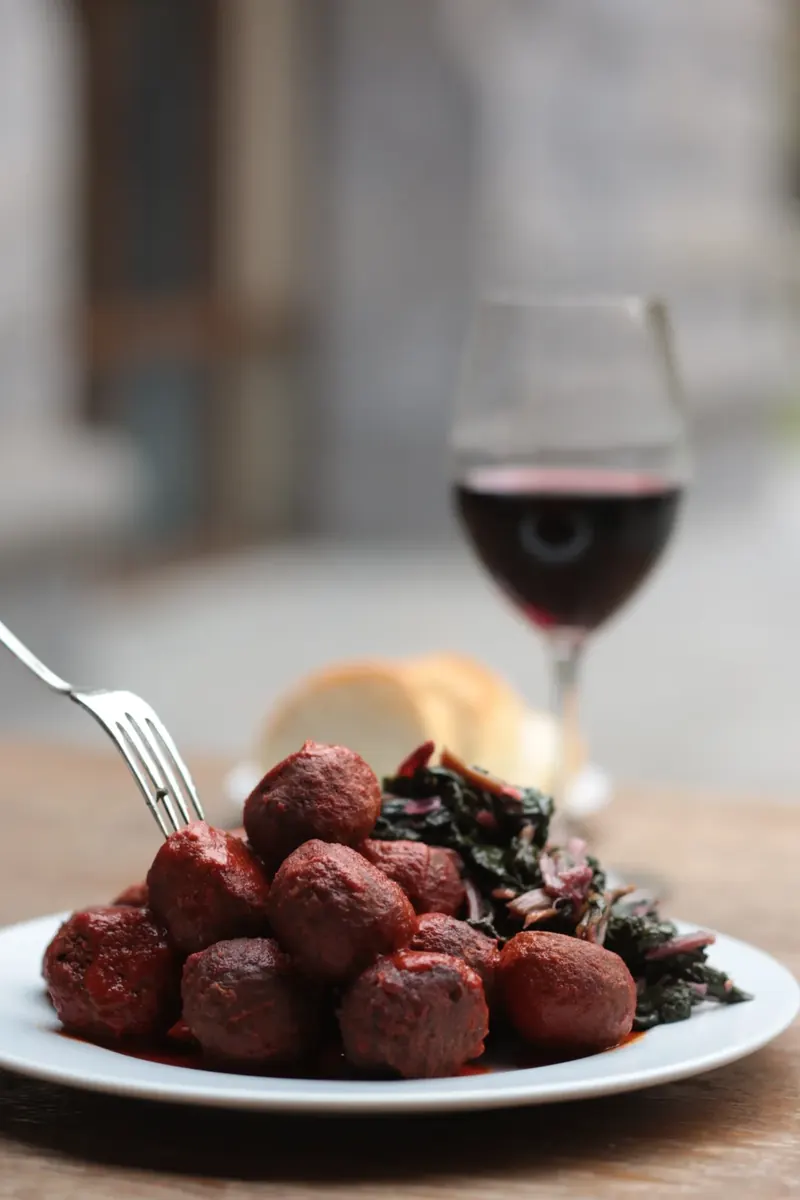
To help my family, I started my cooking career in a small village meatball diner.
Arman Akopyan, Armenia
Senapati Borendra, the oldest child of a poor farming family, was cooking for rich families in Mumbai at 18. Later, in Hong Kong, he cooked part-time in restaurants in the evenings on top of a job at his country’s consulate, because the money he sent home was not enough. Sergiy Borodkin worked for a year at a bakery in France owned by the father of a friend from the army.
After a year there, I had earned enough money to enroll at Le Cordon Bleu culinary school. It was the best investment of my youth.
Sergiy Borodkin, Tel Aviv, Israel
School was only the start
In eight stories the chef says that school or theory was not enough on its own, or that the real learning began with the first job. Daria Grositskaya finished her culinary studies with honors.
Just a month after finishing my studies, I became a chef’s assistant. I was very surprised to find that my learning didn’t stop. On the contrary, that was the moment my real universities began.
Daria Grositskaya, Kyiv, Ukraine
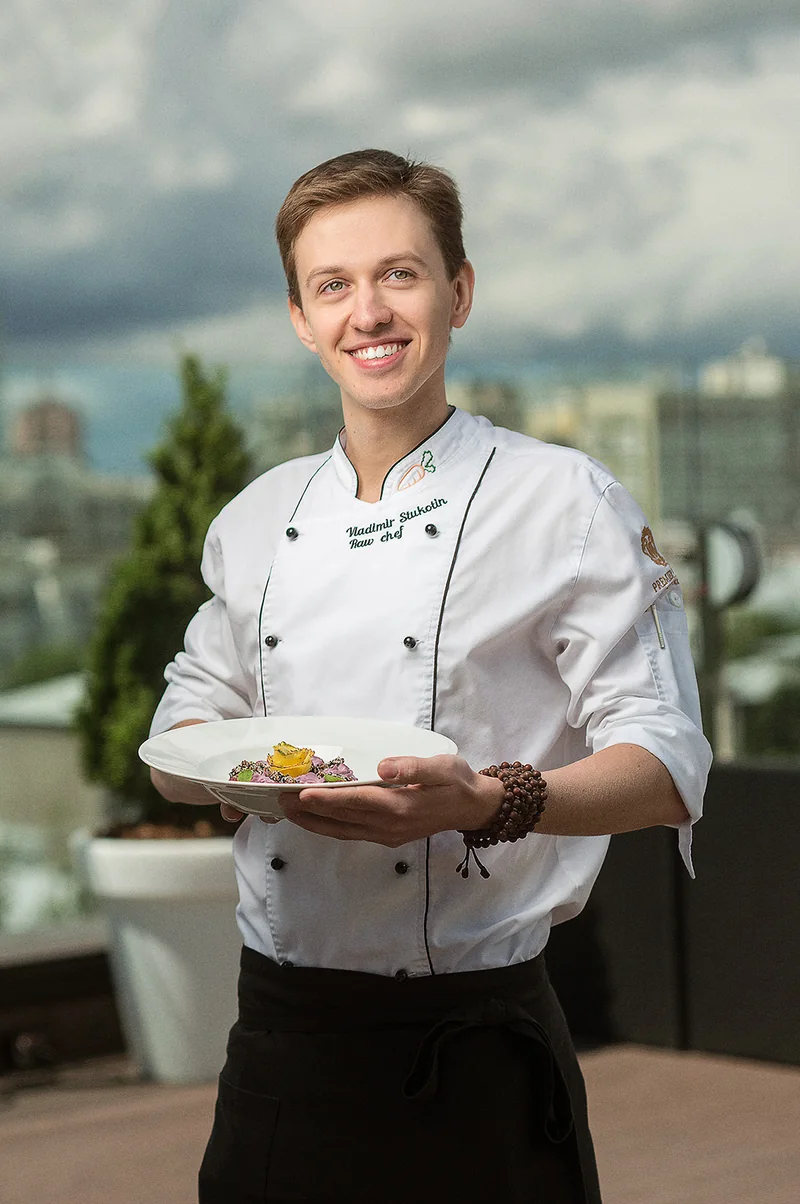
Volodymyr Stukotin was 17 when he started as a cook at a hotel in Donetsk.
I had graduated from food processing college and realized I knew nothing.
Volodymyr Stukotin, Kyiv, Ukraine
Oriol Ivern went from culinary school to the kitchen of the Beau Rivage Palace in Switzerland.
I wanted to understand how a professional kitchen worked, and I found myself in the perfect place to truly start learning. As they say, experience comes from doing, and studying alone is not enough.
Oriol Ivern, Barcelona, Spain
For Matthieu Bonnier, “sitting in a classroom for long hours” did not fit his idea of becoming a chef, while the apprenticeship that followed was “an absolute blessing”. Serhiy Shpyakin decided he needed “practical experience, lots of it and all at once”, and found his first job, at Arena City in Kyiv.
Hotel kitchens come up in nine stories as a first or early workplace. Sebastian Frank kept working in his hotel kitchen all through culinary school.
A hotel is a kind of beehive that never sleeps: every hour there is something to do, and everything has to be done quickly and smoothly, otherwise there’s a problem.
Sebastian Frank, Berlin, Germany
The first chef they worked under
Twelve stories single out a chef or a teacher from the first job or apprenticeship. Hideaki Sato started his career at 19.
I remember very well how the first chef I worked under inspired me. He seemed like a magician to me!
Hideaki Sato, Hong Kong
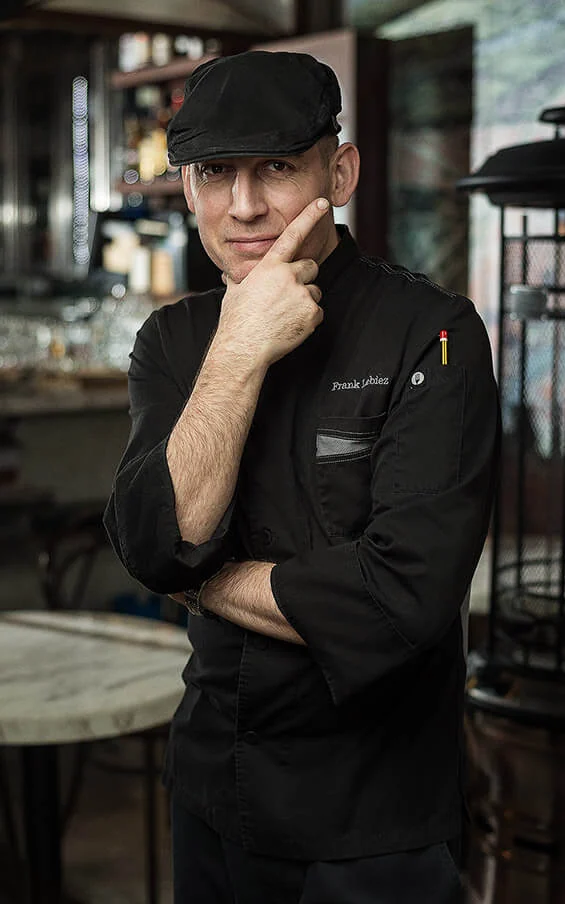
Frank Lebiez says his first real memories are tied to his first job.
Early in my career I was lucky to find a very good chef, who taught me respect for the product and showed me that you can create something astonishing with simple things.
Frank Lebiez, Hong Kong
Caesar Lee, a kitchen helper at 13 or 14, learned by watching the hotel chef.
I was such a small person in the kitchen, and he was so tall. I always found it interesting to watch him out of the corner of my eye while I cleaned the stove.
Caesar Lee, Hong Kong
Jacky Chan spent nine months as an apprentice on prep work before he was allowed to cook. Then, with all the chefs away on a break, a customer ordered Yang Chow fried rice and the manager told him to make it. The head chef came back just before it was served, tasted it and said: “Kid, well done.”
Oleg Pashkevich learned from the sushi master Yoshi in Kyiv by cutting daikon “into slices as thin as rice paper”, and was hit with the tamago spatula when he did not do it well. Anahit Sargysian calls John Paul Sax, the founder of the restaurant where she started as an assistant cook, “the best teacher”.
No small jobs
Across the 105 stories, a first job could mean washing dishes, peeling vegetables, carrying plates or making espresso from a wooden stool. Aleksey Shvets cooked nights in a small bar at 16. After the army he went back there to peel vegetables and wash floors and ovens, and within half a year he was a cook. His summary of those years:
There are no small jobs, only people with a weak spirit, those who are unable to learn and gain new experience.
Aleksey Shvets, Odesa, Ukraine